Where the Money Leaks: An Honest Look at How American Advertisers Burn Budget
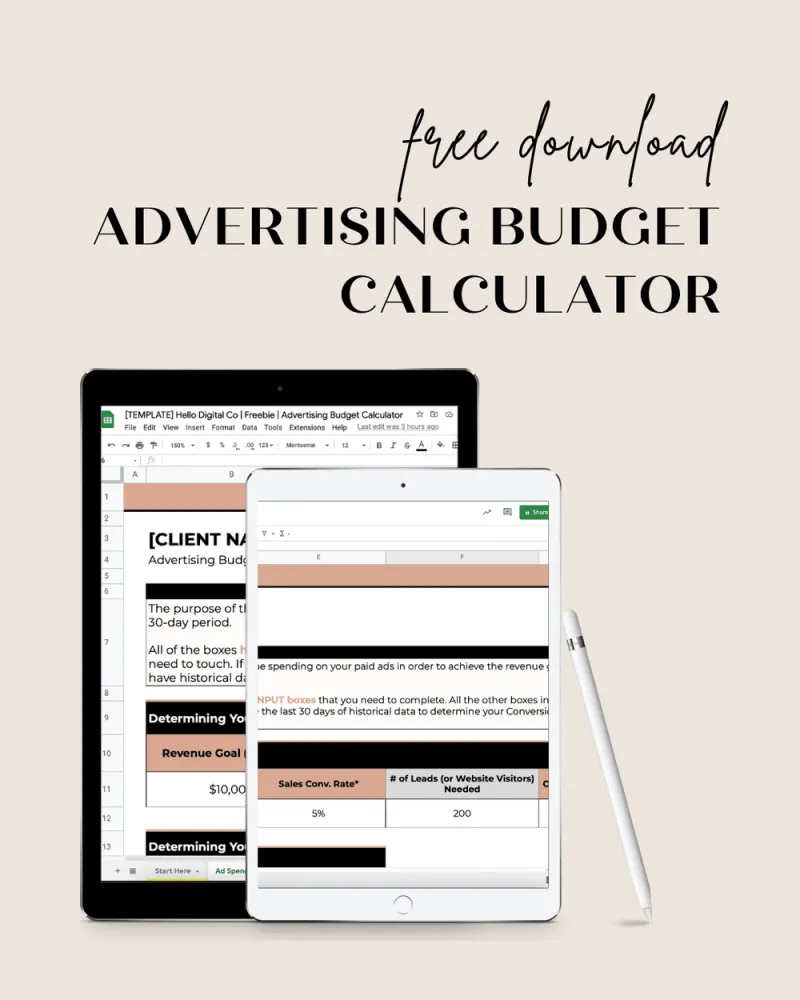
Photo: digital advertising budget spreadsheet on desk with calculator and coffee, via images.squarespace-cdn.com
Here is an uncomfortable truth about online advertising: a meaningful portion of it does not work, and the people paying for it often cannot say which portion. Industry analyses have long suggested that somewhere near 40% of digital ad spend fails to generate a measurable return. Our own campaign audits tell a similar story. The waste is rarely dramatic or obvious. It accumulates quietly, through habits that feel responsible but erode performance month after month.
The Always-On Fallacy
The most expensive habit in digital advertising is the belief that campaigns should never stop. Many small and mid-sized American businesses treat their ad accounts like utilities — switch them on once and pay the bill indefinitely. But advertising is not a utility; it is an investment that demands periodic scrutiny.
Consider a pattern we encounter frequently: a regional service business running the same search and social campaigns for 18 consecutive months with no structural review. During peak season, the ads perform admirably. During slow months, the same spend chases a fraction of the demand at a fraction of the efficiency. The account is not broken — it is simply indifferent to the calendar.
Smarter pacing solves this. Align budgets with seasonality, concentrate spend when conversion data says demand exists, and throttle back deliberately when it does not. Pausing is not quitting; it is reallocating.
The Broad Targeting Trap
Platform algorithms have made it seductively easy to reach enormous audiences. The trouble is that reach is not relevance. Broad targeting inflated by lookalike expansions and loose interest stacks routinely delivers impressions to people who will never become customers.
In campaign reviews, we regularly find that 20% of audience segments drive 80% of conversions — while the remaining segments consume budget with little to show for it. The corrective is unglamorous: segment-level reporting, honest culling of underperformers, and a willingness to narrow rather than widen. A smaller audience that converts beats a vast one that merely sees.
Creative Stagnation
The third leak is the least discussed: ad fatigue. When the same creative runs for months, click-through rates decay, frequency climbs, and cost per acquisition rises — often by 30% or more before anyone notices. Audiences do not announce that they have grown tired of your message; they simply stop responding.
Disciplined advertisers rotate creative on a schedule, test new hooks and formats against incumbents, and treat every asset as temporary. A structured testing program — one variable at a time, statistically meaningful sample sizes — converts creative spending from guesswork into a compounding asset.
Rotation as a Discipline, Not a Reaction
Channel rotation deserves equal attention. The platform that delivered cheap acquisitions two years ago may be saturated today. Businesses that periodically reallocate budget across search, social, display, and emerging channels consistently outperform those anchored to a single platform by habit or familiarity.
Reclaiming the 40%
None of this requires exotic tools or enormous budgets. It requires a quarterly performance review with hard questions: Which campaigns would we launch today, knowing what we know? Which audiences actually purchase? Which creative still earns its placement? The answers, applied consistently, can redirect a substantial share of wasted spend toward channels and tactics with proven returns.
Advertising budgets do not leak because marketers are careless. They leak because attention drifts and accounts run on autopilot. The antidote is a calendar, a checklist, and the discipline to act on what the data plainly shows.